

Program Overview
Our Innovative Learning Approach
We integrate essential 21st-century skills into every aspect of teaching and learning to create an engaging and practical educational experience.
- Experiential learning allows students to learn by doing through real-world projects and community engagement.
- Issue and project-based learning tackles real community challenges with hands-on solutions.
- Discussion and reflection develop critical thinking through active dialogue and self-assessment.
- Research-based learning builds strong analytical skills through guided investigations.
- Internships and fieldwork provide practical experience in community projects and organisational placements.
Future Career Pathways
This programme prepares graduates for meaningful roles in community development and social change. Careers include community leadership, social innovation, social services and local and international non-governmental organisations (NGOs and INGOs).
Curriculum Structure
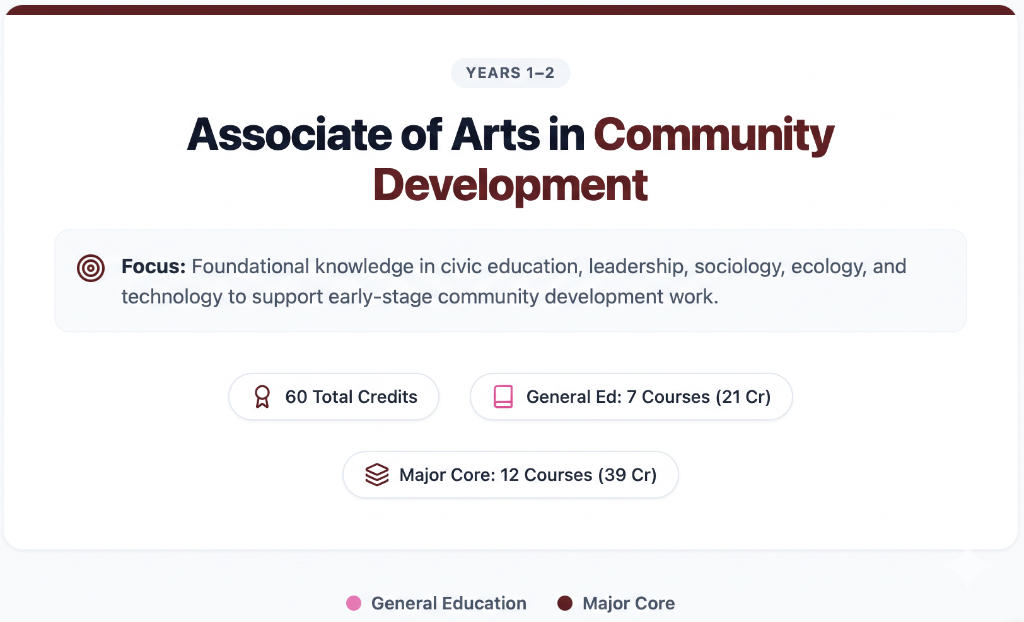
- Associate of Arts in Community Development (Years 1–2)
- Total Credits: 60 credits
- General Education: 7 courses (21 credits)
- Major Core: 12 courses (39 credits)
- Focus: Foundational knowledge in civic education, leadership, sociology, ecology, and technology to support early-stage community development work.
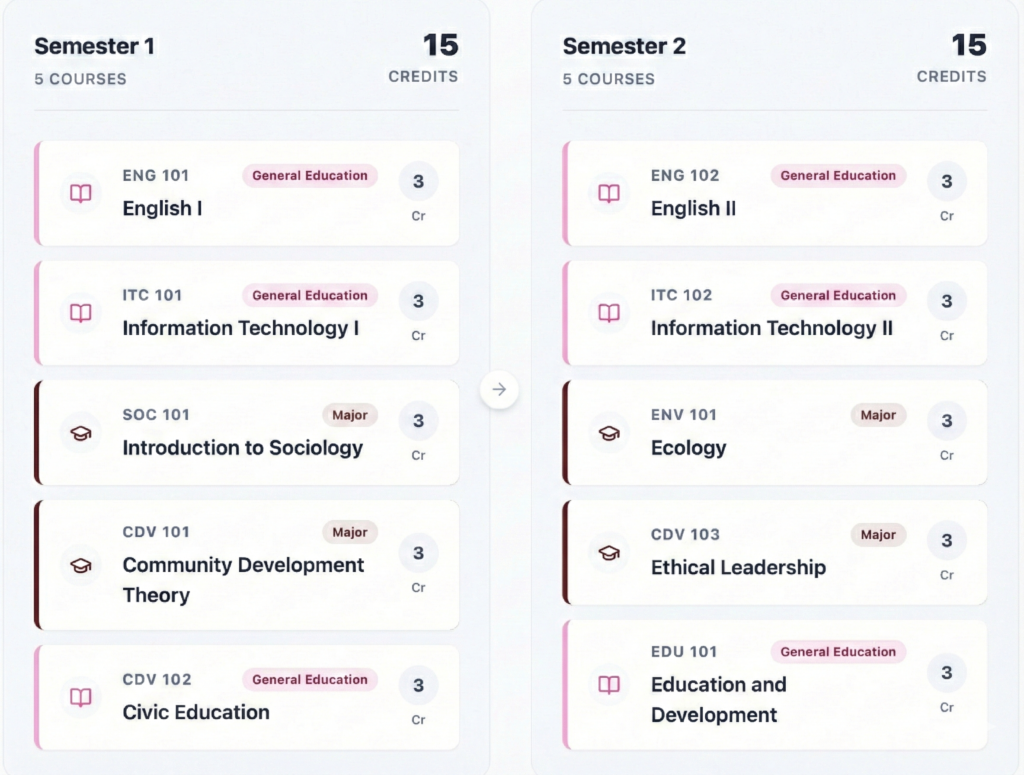
Year - 1
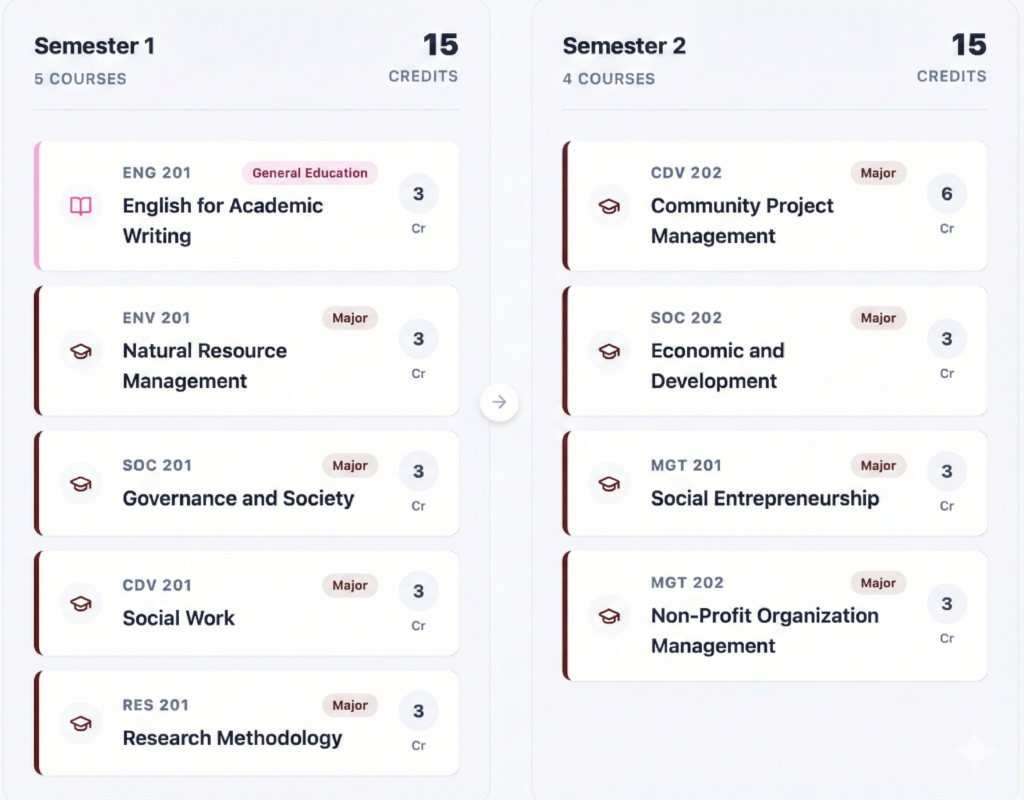
Year - 2
